
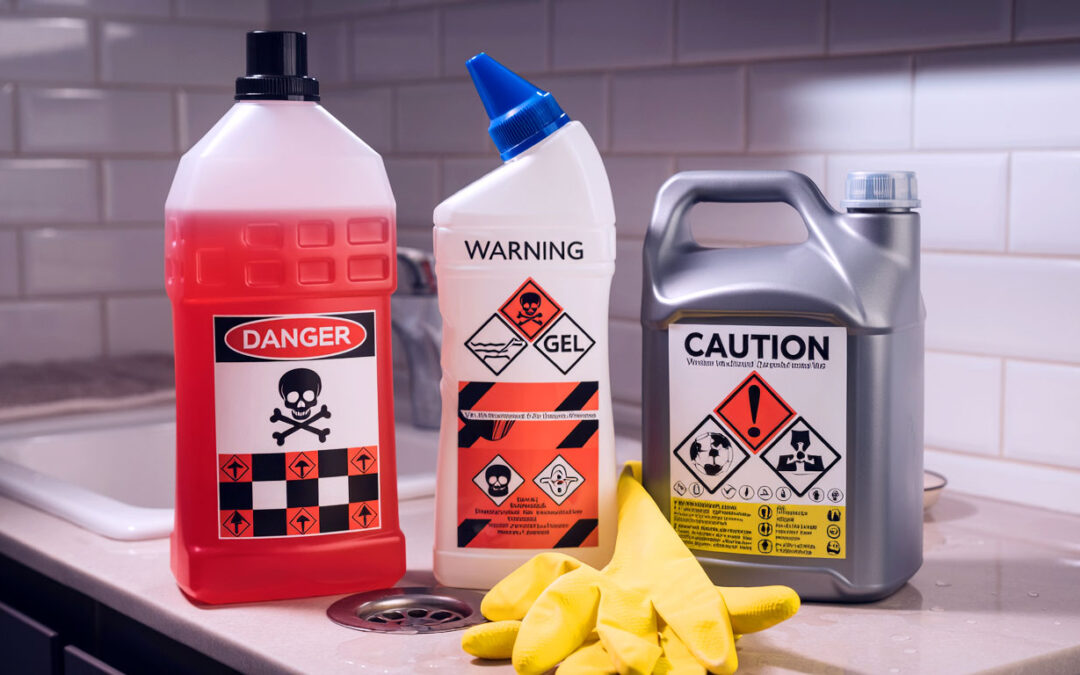
When a sink, shower, or toilet starts draining slowly, it is tempting to reach for a bottle of chemical drain cleaner. These products promise a quick and easy fix, but they often create more problems than they solve. While chemical drain cleaners may provide short-term relief from minor clogs, repeated use can damage your plumbing system, harm the environment, and even pose serious health risks.
Before pouring harsh chemicals down your drain, it is important to understand the hidden dangers and why professional drain cleaning is often the safer, more effective solution.
They Can Damage Your Pipes
One of the biggest drawbacks of chemical drain cleaners is their corrosive nature. Most products contain powerful ingredients such as sulfuric acid or sodium hydroxide (lye), which generate heat as they work to dissolve clogs.
While these chemicals may break down hair, grease, or soap buildup, they can also weaken your plumbing over time. Older metal pipes are particularly vulnerable to corrosion, while PVC pipes can warp or crack from excessive heat. Even newer plumbing systems can suffer long-term damage from repeated exposure to these harsh chemicals.
They Rarely Remove the Entire Clog
Chemical drain cleaners typically attack only part of the blockage. While they may create enough space for water to flow temporarily, much of the clog often remains inside the pipe.
Grease, food particles, soap scum, tree roots, and mineral deposits frequently require mechanical removal rather than chemical dissolution. As a result, many homeowners experience recurring clogs within weeks or even days after using drain cleaners.
They Create Health Hazards
Chemical drain cleaners can be dangerous to anyone using them. Exposure may cause:
- Skin burns
- Eye injuries
- Respiratory irritation
- Toxic fumes
- Serious injuries if accidentally mixed with other household cleaners
Mixing drain cleaners with products containing bleach or ammonia can create hazardous gases that are dangerous to inhale. If the drain cleaner remains standing in clogged water, it also becomes a significant hazard for plumbers attempting repairs.
They Are Harmful to the Environment
After traveling through your plumbing system, many chemical drain cleaners eventually enter wastewater treatment facilities and the environment. Although treatment plants remove many contaminants, harsh chemicals still contribute to environmental pollution.
Choosing environmentally friendly drain cleaning methods helps reduce unnecessary chemical waste while protecting local waterways.
They Don’t Address the Real Problem
Chemical cleaners only treat the symptom, not the underlying cause. Without identifying the source of the problem, clogs will continue returning. Recurring drain clogs often signal larger plumbing issues such as:
- Tree root intrusion
- Broken sewer lines
- Pipe corrosion
- Heavy grease accumulation
- Improper pipe slope
- Mineral buildup from hard water
Safer Alternatives
Preventive maintenance is almost always less expensive than emergency plumbing repairs. Instead of relying on harsh chemicals, homeowners can try several safer methods:
- Use a plunger to resolve minor sink or toilet clogs.
- Remove visible hair or debris with a drain tool.
- Flush drains periodically with hot water to reduce grease buildup.
- Schedule routine professional drain cleaning to prevent major blockages.
- Avoid pouring grease, coffee grounds, and food scraps down kitchen drains.
Chemical drain cleaners may appear to offer a fast solution, but they often create long-term problems for your plumbing system, your health, and the environment. Pipe damage, incomplete clog removal, hazardous fumes, and recurring drainage issues make these products a risky choice for homeowners.
When stubborn or recurring clogs occur, the safest investment is to contact a licensed plumbing professional. With the proper tools and expertise, they can clear the blockage completely, protect your plumbing system, and help prevent future drain problems, saving you time, money, and frustration in the long run. For help finding a professional plumber, visit https://socalplumbers.com/.