
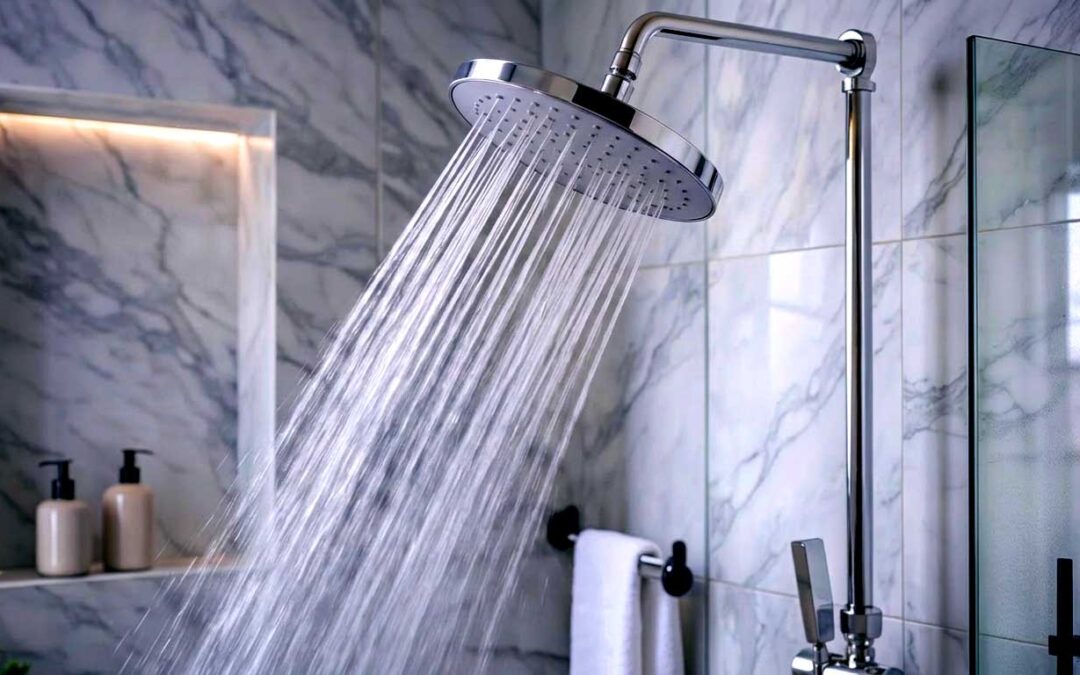
1. Clean or Replace the Showerhead
Over time, mineral deposits from hard water can clog your showerhead and restrict flow.
What to do:
- Unscrew the showerhead.
- Soak it in white vinegar for 30–60 minutes.
- Scrub away buildup with a toothbrush.
- Rinse and reinstall.
If cleaning doesn’t help, upgrading to a high-pressure showerhead can make a noticeable difference—even with the same water supply.
2. Check the Water Valves
Partially closed valves are a surprisingly common cause of low pressure.
Look for the main shutoff valve (often near your water meter) and bathroom-specific or shower supply valves. Make sure they are fully open. Even a small restriction can reduce pressure in the shower.
3. Inspect for Hidden Leaks
Leaks divert water away from where you want it. Warning signs include damp spots on walls or ceilings, unexplained increases in your water bill, and mold or musty smells. If you suspect a leak inside the wall, it is best to call a plumber before the problem gets worse.
4. Check Your Home’s Water Pressure Regulator
Homes often have a pressure-reducing valve (PRV) to protect plumbing from excessive pressure. If it is set too low or failing, it can affect your entire house, including the shower.
Typical residential pressure: 40–60 PSI. A plumber can test and adjust this safely.
5. Upgrade Old Plumbing
Older homes may still have galvanized steel pipes, which corrode internally and reduce water flow. Replacing them with modern materials like copper or PEX can dramatically improve pressure-but this is a long-term investment rather than a quick fix.
6. Consider a Shower Pump
In homes with consistently low water pressure, especially those on gravity-fed systems—a shower pump can significantly increase flow. This solution usually requires professional installation but delivers the strongest results.