
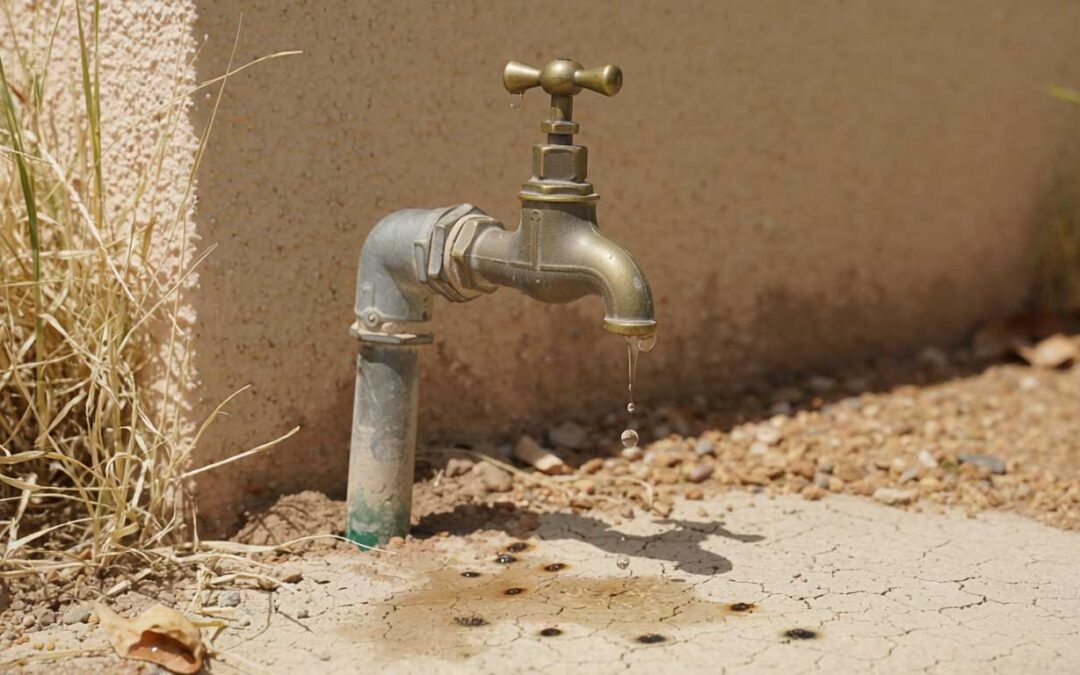
Much of Southern California receives water sourced from the Metropolitan Water District of Southern California and the Colorado River Aqueduct. This imported water is typically high in dissolved minerals like calcium and magnesium, meaning it is considered “hard.”
How Hard Water Impacts Plumbing
Over time, mineral deposits accumulate along pipe walls, narrowing water flow and forcing your system to work harder. Water heaters are especially vulnerable because heat accelerates mineral precipitation, forming thick sediment layers at the bottom of tanks. Hard water causes:
- Scale buildup inside pipes.
- Reduced water pressure.
- Shortened lifespan of water heaters.
- Spotted fixtures and glass.
- Inefficient appliances.
Installing a water softener or whole-home filtration system is often one of the best long-term solutions for Southern California property owners.
Drought and Soil Shifting
Southern California’s frequent drought cycles cause the soil to dry, shrink, and shift. When heavy rains eventually return, the soil expands again. This constant expansion and contraction places stress on underground pipes and slab foundations. Common climate-related issues include:
- Slab leaks.
- Cracked sewer lines.
- Pipe joint separation.
- Foundation movement affecting plumbing alignment
Homes built on slab foundations are particularly vulnerable. Even minor ground movement can strain rigid piping systems beneath your home, leading to hidden leaks that drive up water bills and cause structural damage if left undetected.
Coastal Air and Corrosion
For homes and businesses closer to the coast, from San Diego to Santa Monica, salty marine air accelerates corrosion on exposed metal components. Outdoor plumbing fixtures, hose bibs, and even interior copper piping can show premature wear when exposed to salt-heavy air. Over time, corrosion can lead to pin-hole leaks, weakened joints, rusted water heaters, and degraded shut-off valves.
Regular inspections and corrosion-resistant materials can help mitigate these risks.
High Temperatures and Pipe Expansion
Southern California summers can bring prolonged heat waves. Extreme heat causes pipes, especially PVC and other plastics, to expand. When temperatures cool, they contract. Over time, this repeated movement may weaken connections or seals. Attics, exterior walls, and exposed piping are particularly susceptible to heat-related stress.
Water Conservation Regulations
Ongoing drought concerns have led to strict water conservation measures across the region. Agencies like the California State Water Resources Control Board enforce water efficiency standards that affect plumbing fixtures and appliances.
Low-flow toilets, high-efficiency fixtures, and smart irrigation systems are increasingly common and often required. While these upgrades reduce water usage, improper installation or outdated plumbing systems can create performance issues if not properly integrated.
Protecting Your Plumbing in Southern California
While you can’t change the climate, you can take proactive steps to protect your plumbing:
- Schedule annual plumbing inspections.
- Flush water heaters regularly.
- Install a water softener.
- Monitor for unexplained increases in water bills.
- Address small leaks immediately.
- Upgrade aging pipes to more durable materials.
Southern California’s climate is beautiful, but it is not gentle on plumbing systems. With preventative maintenance and strategic upgrades, you can avoid emergency repairs and extend the life of your pipes, fixtures, and appliances.
If you live or operate a business in Southern California, understanding how local environmental conditions impact your plumbing system is the first step toward long-term reliability and efficiency. For assistance in finding a plumber visit https://socalplumbers.com/.