
A reliable commercial water heater is essential to the daily operation of many businesses. Restaurants, hotels, healthcare facilities, apartment complexes, fitness centers, and manufacturing operations all depend on a consistent supply of hot water to serve customers, maintain sanitation standards, and support critical business functions.
When a commercial water heater begins to fail, the consequences can be significant. Inadequate hot water, rising energy costs, unexpected downtime, and emergency repairs can disrupt operations and negatively impact both employees and customers.
Knowing when to replace a commercial water heater instead of continuing to invest in repairs can save your business time, money, and unnecessary stress. Below are nine key warning signs that may indicate it is time to upgrade your system.
INCONSISTENT OR INSUFFICIENT HOT WATER
One of the most obvious signs of a failing commercial water heater is an inconsistent supply of hot water.
If your business is running out of hot water faster than normal or water temperatures fluctuate unexpectedly, the system may be struggling to meet demand. Common causes include:
- Sediment buildup
- Worn heating elements
- Damaged burners
- Internal tank deterioration
- Aging system components
In high-demand commercial environments, these issues often indicate that the water heater can no longer operate at the capacity required for daily operations.
RISING ENERGY BILLS
A sudden increase in utility costs without a corresponding increase in water usage may signal declining water heater efficiency.
As commercial water heaters age, they often require more energy to produce the same amount of hot water. Sediment buildup and worn components force the system to work harder, increasing energy consumption and operating costs.
Replacing an outdated unit with a modern, energy-efficient model can help reduce utility expenses while improving overall performance and reliability.
FREQUENT REPAIRS
Every water heater requires occasional maintenance and repairs. However, frequent service calls can indicate that a system is nearing the end of its useful life. If your business is repeatedly paying for repairs, replacement may be the more cost-effective solution.
A commonly used guideline is this:
- If repair costs exceed 50 percent of the cost of a new unit, replacement is often the smarter investment.
A new system can provide greater reliability while eliminating the uncertainty and expense associated with recurring repairs.
THE SYSTEM IS APPROACHING THE END OF ITS LIFESPAN
Most commercial water heaters are designed to last between 8 and 15 years, depending on factors such as:
- Usage levels
- Water quality
- Maintenance history
- Equipment type
If your unit is approaching or exceeding its expected lifespan, proactive replacement can help prevent unexpected failures and costly emergency situations.
Waiting until a system completely fails often results in rushed decisions, business interruptions, and higher replacement costs.
RUSTY OR DISCOLORED WATER
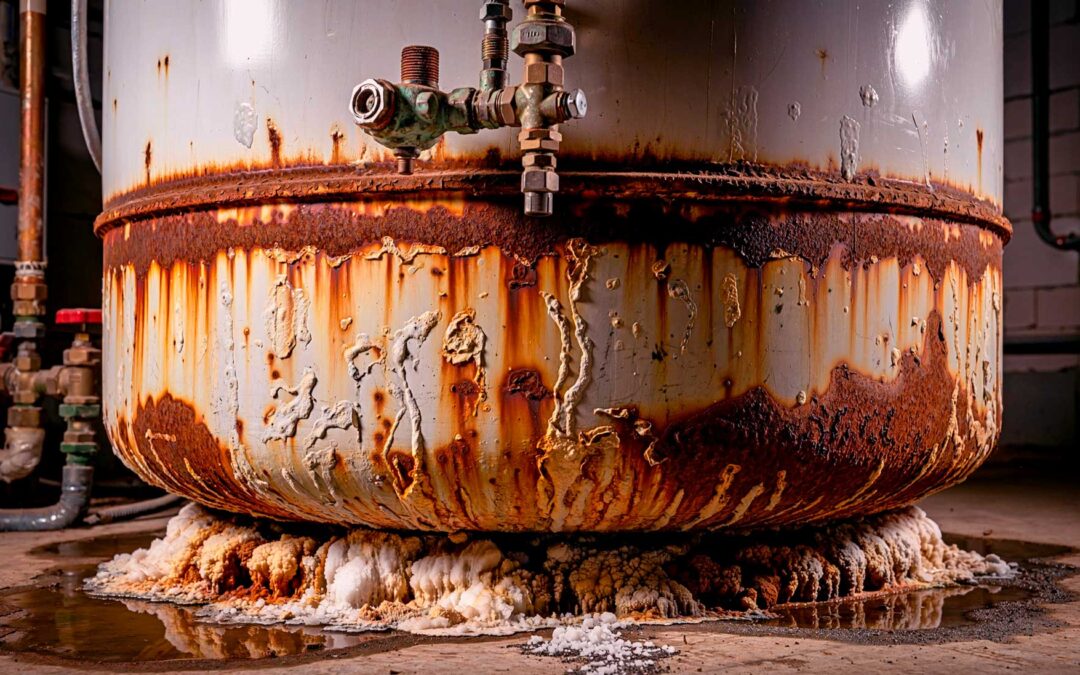
Rust-colored water or water with a metallic taste may indicate corrosion inside the tank. Corrosion is one of the most serious issues a commercial water heater can experience because it typically worsens over time. Once corrosion begins affecting the tank itself, replacement is often the only long-term solution.
Ignoring corrosion can eventually lead to leaks, water damage, and complete system failure.
UNUSUAL NOISES COMING FROM THE TANK
Commercial water heaters should operate relatively quietly.
If you begin hearing:
- Banging
- Popping
- Rumbling
- Knocking sounds
Sediment buildup may be accumulating at the bottom of the tank.
As sediment hardens, it creates a barrier between the heating source and the water, reducing efficiency and increasing stress on the system. While tank flushing may provide temporary relief, persistent noises often indicate more significant internal wear.
VISIBLE LEAKS OR MOISTURE
Any sign of water pooling around a commercial water heater should be addressed immediately.
Leaks may result from:
- Internal tank cracks
- Failed seals
- Corroded components
- Structural deterioration
In many cases, leaks indicate that the integrity of the tank has been compromised.
Beyond equipment failure, water leaks can contribute to:
- Property damage
- Mold growth
- Slip-and-fall hazards
- Operational disruptions
When a commercial water heater begins leaking, replacement is often the safest and most practical solution.
DECREASED WATER PRESSURE
Mineral deposits and sediment accumulation can restrict water flow throughout the system.
Reduced water pressure can negatively impact businesses that depend on consistent water delivery, including:
- Restaurants
- Hotels
- Gyms
- Healthcare facilities
- Manufacturing operations
If water pressure issues are linked to internal buildup within an aging water heater, replacement may restore proper system performance.
OUTDATED TECHNOLOGY
Commercial water heating technology has improved significantly over the past decade.
Modern systems offer advantages such as:
- Improved energy efficiency
- Enhanced temperature controls
- Faster recovery rates
- Digital monitoring capabilities
- Smart diagnostic features
- Remote monitoring options
These advancements not only improve reliability but can also help businesses identify potential issues before they become costly repairs or operational disruptions.
THE BENEFITS OF REPLACING AN AGING COMMERCIAL WATER HEATER
Replacing an aging system before it fails can provide several important benefits, including:
- Lower energy costs
- Improved reliability
- Consistent hot water supply
- Reduced maintenance expenses
- Increased operational efficiency
- Better compliance with current efficiency standards
A proactive replacement strategy helps businesses avoid emergency situations while improving long-term performance.
RECOGNIZE THE SIGNS
Waiting until a commercial water heater completely fails can lead to costly downtime, service interruptions, emergency repair expenses, and customer dissatisfaction.
By recognizing the warning signs early, business owners and facility managers can make informed decisions and plan for replacement before a minor issue becomes a major disruption.
If your commercial water heater is experiencing any of these symptoms, consulting with a licensed plumbing professional can help determine whether repair or replacement is the best course of action. Investing in a modern, energy-efficient commercial water heater is not only a smart maintenance decision. It is a long-term investment in the reliability, efficiency, and success of your business.
For more information about commercial plumbing services or to connect with experienced plumbing professionals in Southern California, visit SoCalPlumbers.com.