
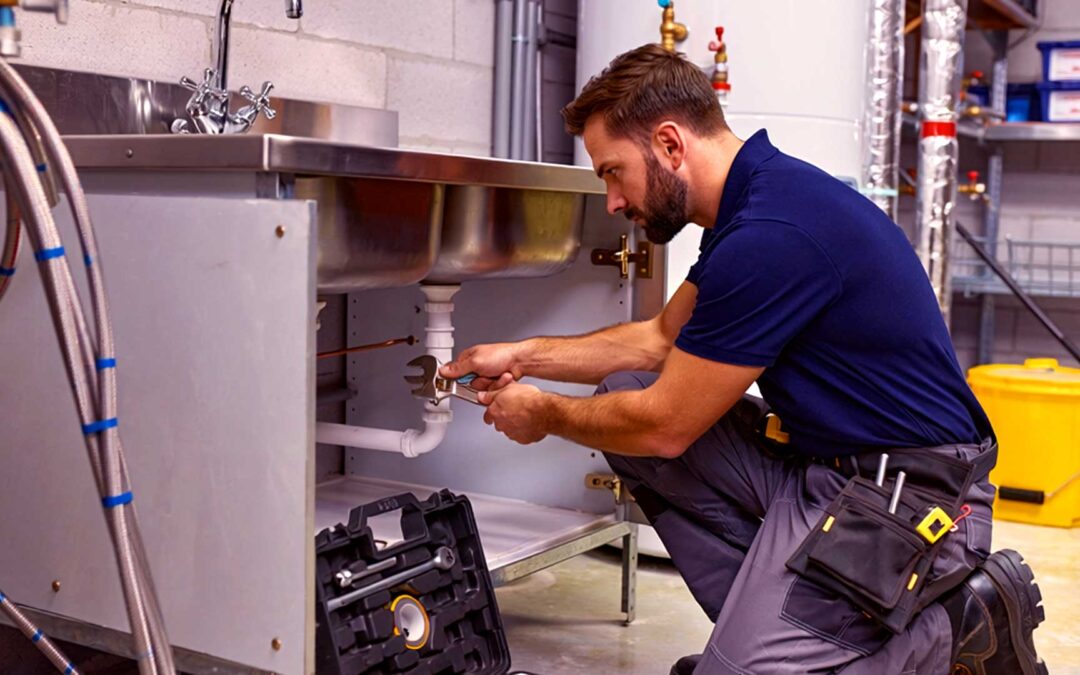
Plumbing emergencies can strike without warning – and for commercial property owners or managers, the consequences go far beyond inconvenience. A burst pipe, sewer backup, or overflowing restroom can halt operations, damage property, disrupt tenants, and lead to costly repairs or lost revenue. The good news? With the right preparation, many plumbing emergencies can be mitigated or avoided altogether.
This guide walks you through practical steps to prepare your commercial property for plumbing emergencies, helping you protect your investment and maintain business continuity.
8 Steps to Prepare
Know Your Plumbing System Inside and Out – Preparation starts with knowledge. Every commercial property should have clear documentation of its plumbing system, including:
- Main water shut-off valve location
- Individual shut-off valves for restrooms, kitchens, and tenant spaces
- Sewer cleanout locations
- Water heater and boiler systems
- Backflow prevention devices
Make sure this information is easily accessible, not locked away in a filing cabinet no one can find. Label shut-off valves clearly and ensure maintenance staff and key personnel know how and when to use them. Also, create a simple plumbing map and keep both digital and printed copies on-site.
Establish an Emergency Response Plan – When water is pouring through a ceiling or sewage is backing up, panic can slow response time. A written emergency plan ensures everyone knows what to do immediately. Your plumbing emergency plan should include:
- Steps for shutting off water quickly
- Who to contact internally (facility manager, property owner)
- Emergency plumber contact information
- After-hours and holiday procedures
- Tenant communication protocols
Review the plan annually and update it whenever vendors or building systems change.
Build a Relationship with a Reliable Commercial Plumber – One of the biggest mistakes property owners make is waiting until an emergency to find a plumber. During peak demand or after-hours events, response times can be slow if you are not an established customer.
Partnering with a trusted commercial plumbing provider offers benefits such as:
- Faster emergency response
- Familiarity with your building’s systems
- Preventive maintenance recommendations
- Priority scheduling
Look for plumbers experienced with commercial properties, code compliance, and large-scale systems, not just residential repairs.
Schedule Preventive Maintenance Regularly – Preventive maintenance is one of the most effective ways to reduce emergency plumbing calls. Routine inspections can identify small issues before they become major problems. Key maintenance tasks include:
- Inspecting pipes for corrosion or leaks
- Flushing water heaters
- Checking water pressure levels
- Testing sump pumps and backflow devices
- Inspecting sewer lines with camera inspections
For commercial properties, maintenance should be scheduled at least annually—or more frequently for older buildings or high-usage facilities like restaurants, hotels, or medical offices.
Monitor Water Usage and Pressure – Unusual water usage or pressure fluctuations often signal hidden plumbing problems. Installing water monitoring systems can help detect leaks early and prevent catastrophic damage. Watch for warning signs such as:
- Sudden spikes in water bills
- Low water pressure in multiple areas
- Noisy pipes (banging or whistling)
- Slow drains throughout the building
Smart leak detection systems can automatically alert managers – or even shut off water – when abnormal flow is detected.
Prepare Tenants and Staff – Your preparedness is only as strong as the people on-site. Tenants and staff should know how to recognize early signs of plumbing trouble and who to contact immediately. Provide guidance on:
- Reporting leaks or slow drains promptly
- What not to flush or pour down drains
- How to respond to visible leaks or flooding
- Emergency contact procedures
Posting signage in restrooms and break areas can help prevent misuse that leads to clogs and backups.
Protect Vulnerable Areas – Certain areas of commercial properties are more susceptible to water damage, including: server rooms, electrical rooms, basements, and storage areas.
Install floor drains where appropriate, ensure sump pumps are functional, and elevate sensitive equipment. Waterproofing measures and secondary containment systems can significantly reduce damage during emergencies.
Review Insurance and Documentation – Plumbing emergencies often lead to insurance claims, and being prepared can speed up the process. Make sure you have:
- Up-to-date insurance coverage for water damage
- Documentation of maintenance records
- Photos of critical plumbing areas
- Vendor invoices and inspection reports
Good documentation can help validate claims and demonstrate responsible property management.
Plumbing emergencies do not have to become full-scale disasters. With proactive planning, routine maintenance, and strong vendor partnerships, commercial property owners can minimize downtime, reduce repair costs, and protect tenants and assets.
Preparing today means fewer surprises tomorrow – and when an emergency does happen, you will be ready to respond quickly and confidently. To find out more information on plumbing issues or find a plumber visit https://socalplumbers.com/.